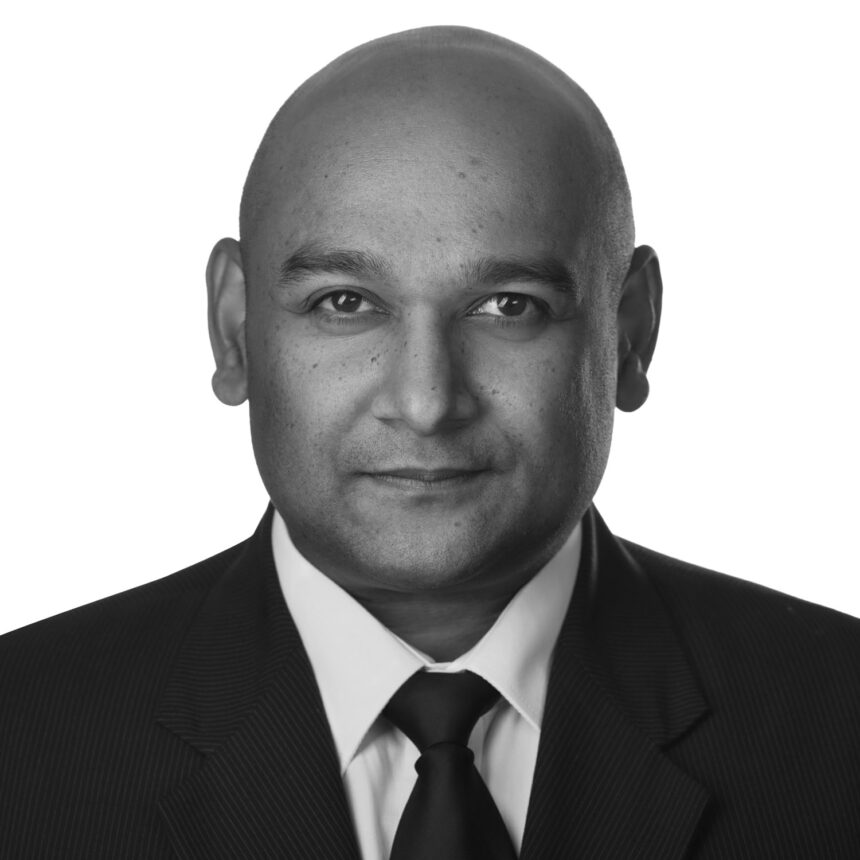
Dary Makoona is a Senior Associate Solicitor at Reeds who is a very keen and passionate lawyer. Dary’s academic studies include a Master of Laws (LLM) with distinction, a First-Class honours degree in Law (LLB Hons), Legal Practice Course (LPC) and a Bachelor of Business Management.
Prior to joining Reeds, Dary served for almost twelve years as a military police officer in the British Army and was deployed on various active operational theatres overseas. Dary continues to have strong links to the military community as he currently serves in the Army Reserve on a part-time basis.
He also has an extensive knowledge of the military justice system as he was also attached to the Army Legal Services during the course of his military career. He also represented British Army personnel who had been arrested by the military police abroad.
Dary’s combination of criminal defence experience, military service and specialist prison law expertise gives him a unique understanding of both pre-conviction and post-conviction matters. He can advise clients from criminal investigations at Police Stations, court appearances, sentence, custody, progression to open conditions, parole, recall, release and licence.
As a qualified Duty Solicitor, he has a very solid client base across Milton Keynes, Kempston, Bedford and Luton. Dary represents clients at police stations and Magistrates’ Courts who have been charged with offences ranging from shoplifting to murder.
For Reeds clients, and other firms’ clients who have pleaded guilty or been found guilty, Dary’s support does not stop at conviction or sentence. He understands that the end of the criminal case is a very difficult uncertain stage for both clients and families. The focus shifts to sentence progression, release planning, Home Detention Curfew, re-categorisation to open prison, preparation for release and advice on licence conditions on release.
Parole Board Representations and Advocacy
For clients whose release and progression are referred to the Parole Board, Dary provides specialist advice, representations and advocacy. This includes clients serving life, IPP, EDS, SOPC and Power to Detain (PTD) sentences where release or progression depends on risk being assessed by the Parole Board.
Dary has an excellent ability to analytically review the parole dossier, identify central risk issues, consider professional recommendations, challenge inaccurate or unfair material and prepare detailed representations focussing on the legal test.
Where a case is directed to an oral hearing, the process can be stressful and difficult to understand for clients. Dary assists by reviewing the parole dossier, preparing clients for the issues likely to be explored at the hearing, advises on the evidence, cross-examine witnesses and make focused closing submissions at the hearing. In complex cases where mental health issues have been identified, Dary usually commissions independent psychological or psychiatric reports for his clients. Dary is very attentive to detail and ensures that any inaccurate or unfair material is challenged.
Open Conditions
Dary can assist clients with re-categorisation reviews and appeals which is a key sentence progression goal once clients are within five years of their release date or earliest release date. This has become particularly important following the Sentencing Act 2026 reforms which moved release dates for many determinate prisoners to earlier release points.
Dary can review the categorisation, risk assessments, prison behaviour, offending behaviour programmes and make representations to support a move to open conditions. When recategorisation is not feasible, Dary advises on sentence planning to navigate the complex prison system to eventually make an effective application for open conditions.
Release and Challenging Licence Conditions
After release, clients’ sentences do not end as they will be subject to licence conditions, and any breach could lead to recall back to prison. This is very important because following the Sentencing Act 2026 changes to earlier release points, many clients will spend a longer part of their sentences in the community under licence. Those licence conditions are often determined on a “paper” assessment by one probation officer who may have very limited knowledge of the client.
Licence conditions are very often overlooked by clients, but they can have a significant impact on family life, employment, accommodation and rehabilitation. Dary assists clients and their families where licence conditions are unclear, excessive, impractical or unsupported by the evidence. Licence conditions must be necessary, proportionate and connected to managing risk. Where conditions do not meet the legal test, Dary makes representations to Probation or the Parole Board for the removal or variation of the condition. If unsuccessful, Dary has previously escalated matters to the Prison and Probation Service Ombudsman.
Recall and Re-release
Unfortunately, sometimes clients are recalled to prison and Dary assists by reviewing the recall dossier, alleged breaches, risk assessments and makes representations for re-release.
Dary also advises on the newly introduced fixed-term recall (FTR56), where the offender is recalled for 56 days and automatically released after that. This can be subject to abuse by probation as there is no authority like the Parole Board to review the lawfulness, fairness and appropriateness of the recall. In these cases, Dary makes representations for re-release to the Secretary of State for Justice identifying irregularities with the recall. Dary appreciates that 56 days does not seem to be a long time, but this is a long time to spend in prison which can lead to loss of accommodation, employment, deterioration of mental health and loss of family support.
In cases of standard recalls where re-release depends on review by the Parole Board, Dary assesses these cases and makes representations to the Parole Board addressing the legal test for re-release.
Unlawful Detention / Parole hearings delays
Dary takes a firm stance against unlawful detention and delay affecting his clients’ liberty. When this is the case, Dary acts urgently by making representations, preparing pre-action correspondence, and advising whether judicial review or compensation should be pursued.
He has previously secured monetary compensation against the Ministry of Justice and the Parole Board for clients who were unlawfully detained and had delayed parole hearings. The new release point changes involve complex sentence calculation which can lead to mistakes, but this is area in which Dary is highly experienced.
Independent Adjudication before District Judges
Dary regularly represents clients in independent adjudications before District Judges across the UK. His criminal defence experience is very valuable in these cases, as adjudications require careful analysis of evidence, disclosure, procedural fairness, and cross-examination of witnesses.
Moreover, Dary’s specialist prison law knowledge enables him to understand the wider impact an adjudication may have on sentence progression, parole, category status, Home Detention Curfew, open conditions or release.
Armed Forces Compensation Scheme (AFCS)
Dary also assists serving personnel, reservists and veterans with AFCS claims against the Ministry of Defence.
Dary’s military background gives him a practical understanding of service life, military discipline, operational duties, chain of command, service records and the difficulties that injured service personnel and veterans face when trying to explain how an injury or illness was caused or made worse by military service.
This is particularly useful for clients who want advice from a solicitor who understands both the legal process and the realities of military service.
Judicial Review
Dary also advises clients on judicial review claims, which involve challenging decisions made by public authorities such as the Ministry of Justice, His Majesty’s Prison and Probation Service and the Parole Board. This may include decisions affecting release, recall, sentence progression, categorisation, licence conditions, unlawful detention, delay, or failure to follow the correct policy or legal process.
Where appropriate, Dary prepares urgent pre-action letters challenging the decision and seeking a lawful resolution before court proceedings become necessary. If the matter cannot be resolved, he can advise on whether judicial review proceedings should be pursued.
Family Support
When a client is in prison, it is often their family who are left trying to understand the complex prison system and what can be done to support their loved one. Families can feel isolated, anxious and unsure where to turn, particularly where they are struggling to obtain clear information from the prison.
Dary regularly communicates with parents, partners and siblings who are worried about release dates, parole, safety concerns, open conditions, prison transfers and licence conditions on release. He provides clear and realistic advice so families can understand the legal position, the options available, and what action can be taken.
In accordance with the Solicitors’ Regulatory Transparency Rules for motoring offences we confirm that Dary Makoona charges Level C hourly rates.
Dary is also fluent at conversing with clients in French.
Recent and notable cases
Dary has dealt with a vast number of adjudications before District Judges across the UK on a wide range of offences. He is very attentive to detail and has very regularly got charges dismissed for mistakes on charge sheets. This is crucial for clients who have been charged with prison offences and have upcoming parole hearings.
He takes the very strong view that if someone’s liberty is being deprived, all procedures have to be followed correctly. Their conviction should be safe and if convicted, their punishments should be proportionate, fair and reasonable. Dary has previously made appeals of adjudications to the Senior District Judge, Chief Magistrates’ of Westminster Magistrates Court.
A case of a female prisoner who had an upcoming parole hearing, but unfortunately was charged with possession of unauthorised articles and a positive drug test in prison. Dary adjourned her parole hearing so that the adjudication could be resolved before going back to the Parole Board.
Dary found some procedural errors on both charges and made an application for all matters to be dismissed which was agreed by the District Judge.
Soon after, Dary represented TH at her parole hearing and convinced the Parole Board to release her despite no recommendations for release by the prison/probation service and also being under investigation for an alleged firearm offence by the Police.
Dary secured the IPP Termination of SA licence despite the client himself having absolutely no hope this would ever happen. The client did not attend his appointment with Dary as ,like many IPP prisoners, he had this feeling of hopelessness.
Dary chased SA frequently until he agreed to have a 15 minutes telephone call with us. That was crucial as after Dary submitted very strong written legal representations, the Parole Board was persuaded that his IPP licence had to be terminated without the need for a hearing.
This involved an IPP client who only had a tariff of 5 years but was not released by the Parole Board and had spent about 15 years in prison. Dary managed to obtain GM a recommendation for open prison, but this was refused by the Secretary of State for Justice. Dary remained determined and worked with GM for years until he obtained his release by the Parole Board.
Under new legislation, GM will soon be eligible for his IPP licence to be terminated which Dary intends to get it terminated.
Dary regularly assists clients with severe mental issues like HH who was sentenced a life sentence after a murder conviction. Dary secured a move to open prison for HH but was unfortunately returned to closed prison. Dary and HH worked together for many years and finally managed to secure his release from prison.
These matters are extremely complex with medical reports, psychiatric and psychological reports in which Dary is very well experienced. In case of any doubt, he will obtain funding and commission independent psychological or psychiatrist reports for his clients.
Testimonials
“I would like to thank Mr Makoona for having convinced my husband to apply for his IPP termination when he thought it would never happen. After being convinced, my husband applied for it and with Mr Makoona’s excellent legal representation, the Parole Board terminated the IPP without even having a hearing. Thank you so much Dary, you made our family a normal family again and have started living our new life…Thank you Reeds Solicitors and hoping that more IPPs will come to you…I will very certainly recommend you”
Client
“Thanks Dary, it was a very long road but we made it. My mandatory life licence for murder which I obtained as a young immature teenager has been suspended and now live a new life in the Netherlands with my wife. Thank you!!!”
Client